Vienna is one of the few cities where the digitalization subsidy math genuinely changes the no-code versus custom software decision. The Wirtschaftsagentur Wien covers 50% of costs for external development, consulting, and implementation, up to €50,000, for projects with a minimum volume of €10,000. Unlike voucher schemes elsewhere in Europe that only fund template websites or off-the-shelf SaaS tools, this one doesn't exclude custom development. A Viennese SME weighing a bespoke build against another year on a no-code platform isn't necessarily paying the full custom price out of pocket.
That changes the calculation, but it doesn't eliminate the underlying question: does this business actually need custom software, or is the current no-code setup still doing its job? Subsidized or not, a custom build is still a real project with real scope, and the businesses that benefit most are the ones that can point to a specific workflow the no-code layer can no longer support — not a general feeling that it's time to modernize.
Where no-code tools genuinely stop being enough
No-code platforms and spreadsheets are excellent for what they're built for: simple records, basic automations, low-volume workflows. The signal that a Vienna business has outgrown one isn't cosmetic — it's structural. Integrations the platform can't support. Data relationships too complex for a flat spreadsheet. Compliance or reporting requirements that need an audit trail, not a shared file.
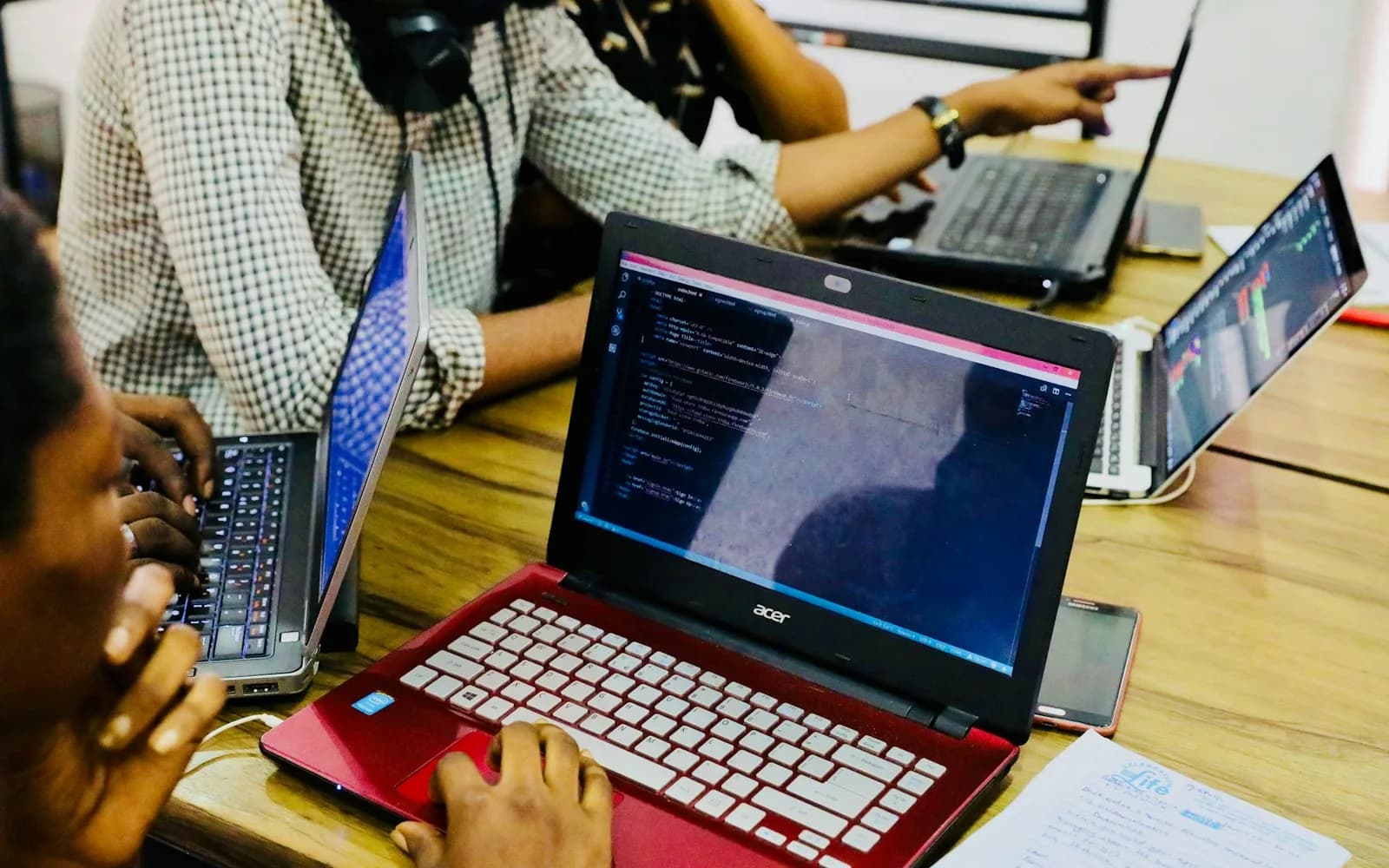
What the ceiling actually looks like
| Signal | What's happening underneath | Why no-code can't fix it |
|---|---|---|
| A workaround gets added every few months just to keep the tool doing what's needed | The platform's built-in limits are being routed around by hand | No-code tools trade flexibility for ease of use, by design |
| Reporting takes hours because data lives in disconnected tools | No shared data model enforcing consistency | Templates and no-code platforms don't enforce a real schema |
| An integration the business actually needs isn't supported | The platform's API or plugin ecosystem has a hard limit | No-code tools serve common integrations, not bespoke ones |
| Compliance questions take too long to answer | No structured audit trail behind the data | Spreadsheets and generic tools weren't built for granular access logging |
Vienna's international growth trajectory raises the stakes
Austrian startups raised around €250 million in the first quarter of 2026 alone, and the average share of startup revenue generated abroad has risen to 42% — the highest level since the relevant surveys began — with 82% of startups actively planning or preparing international expansion. ViennaUP, the city's flagship startup festival, drew roughly 15,000 participants from 95 countries in its most recent edition, underscoring how outward-facing Vienna's tech ecosystem has become.
A business scaling into new international markets is exactly the kind of business most likely to hit a no-code platform's ceiling first: multi-currency handling, market-specific compliance, integrations with partners or systems abroad. The generic tool that worked for a domestic-only operation often can't keep up once the business starts operating across borders.
Making the subsidy work for a custom build, not just a template
The Wirtschaftsagentur's funding structure has one hard rule that shapes how a Vienna business should plan: the project cannot start before the application is submitted and approved. Starting early, even informally, disqualifies the whole project from funding. With 2026 submission deadlines at the end of June, September, and December, a business considering a move off no-code should scope the project and file for the subsidy before any development work begins, not after.
Realistic Austrian SME cost benchmarks put a scoped custom build somewhere between roughly €15,000 and €80,000 depending on complexity — a range where the Wirtschaftsagentur's 50% co-funding up to €50,000 can offset a meaningful share of the total, provided the timing and paperwork are handled correctly.
How to decide, step by step
- Identify the workflow the no-code tool can no longer support. Look for recurring manual rework, integration gaps, or compliance requirements the platform wasn't built to handle.
- Estimate the real cost of staying on the current tool. Count the hours spent working around limits, not just the subscription fee.
- Scope a custom build around that specific workflow. Keep the project focused enough to fall within a fundable, well-defined budget.
- Apply for the Wirtschaftsagentur digitalization subsidy before starting. The project must not begin before the application is approved, so timing matters as much as scope.
- Launch with an owner and a measurement plan. Assign who monitors the result and which numbers prove the investment worked.
- Expand only from evidence. Use real usage and error data from the first release to justify the next one.
What are the actual risks?
The main risk isn't the technology — it's timing and scope. Filing the subsidy application after work has already started forfeits the funding entirely, and businesses that try to replace their entire no-code stack in one project routinely run over both budget and the fundable project window. The safer approach: fix the one workflow that's actually costing the most, apply for funding before starting, and expand only once that first release is proven.
What to measure after launch
Manual hours saved, error rate before and after, integration reliability, and time to answer a compliance or reporting question. For a business that made the move partly to support international growth, tracking how the new system handles multi-market complexity compared to the old no-code setup is worth adding to that list.
Where Yarify fits
Yarify is a Prague-based custom software and AI automation studio working remotely with Austrian and EU businesses inside CET/CEST hours. The useful starting point is a focused diagnostic on the one or two workflows where the no-code ceiling is closest — and, where relevant, help scoping a project so it lines up with Vienna's Digitalisierungsförderung deadlines — through custom software development and system integrations that connect to what a business already runs.
FAQ
Does Vienna actually subsidize custom software, unlike some other cities' digitalization grants?
Yes. The Wirtschaftsagentur Wien's digitalization funding covers 50% of costs for external development, consulting, and implementation up to €50,000, with a minimum project volume of €10,000 — and unlike some national digitalization voucher schemes elsewhere in Europe, it isn't restricted to template or SaaS tools. That makes custom development a genuinely subsidized option for Viennese SMEs, not just something they pay for entirely out of pocket.
When does no-code stop being the right choice for a Vienna business?
When a workflow needs integrations, data structure, or compliance handling that a generic platform's limits keep blocking — not when the team simply feels like the tool looks outdated. Continued reliance past that point usually shows up as recurring manual rework rather than a single dramatic failure.
How much does custom software actually cost for a Vienna SME?
Realistic ranges run from roughly €15,000 for a scoped custom build up to €80,000 for more complex projects involving multiple integrations, according to Austrian SME cost benchmarks. With the Wirtschaftsagentur's 50% co-funding up to €50,000, a large share of a typical project's cost can be offset, provided the application is approved before work begins.
What has to happen before applying for Vienna's digitalization subsidy?
The project must not start before the funding application is submitted and approved — starting early disqualifies the whole project from funding. Vienna SMEs planning a custom software build should scope the project and file for the subsidy first, with upcoming 2026 deadlines at the end of June, September, and December.
Is Vienna's startup and business ecosystem growing enough to justify custom investment?
Austrian startups raised around €250 million in the first quarter of 2026 alone, and the average share of startup revenue generated abroad rose to 42%, the highest level on record, with 82% of startups planning international expansion. Businesses scaling into new markets are exactly the ones most likely to hit a no-code platform's ceiling first.
What should a Vienna business prepare before choosing between no-code and custom?
A list of the workflows a no-code tool or spreadsheet can no longer support, the systems that need to connect, and a rough budget scoped against the Wirtschaftsagentur's funding window and deadlines. That turns a vague "should we go custom" question into a fundable, scoped decision.