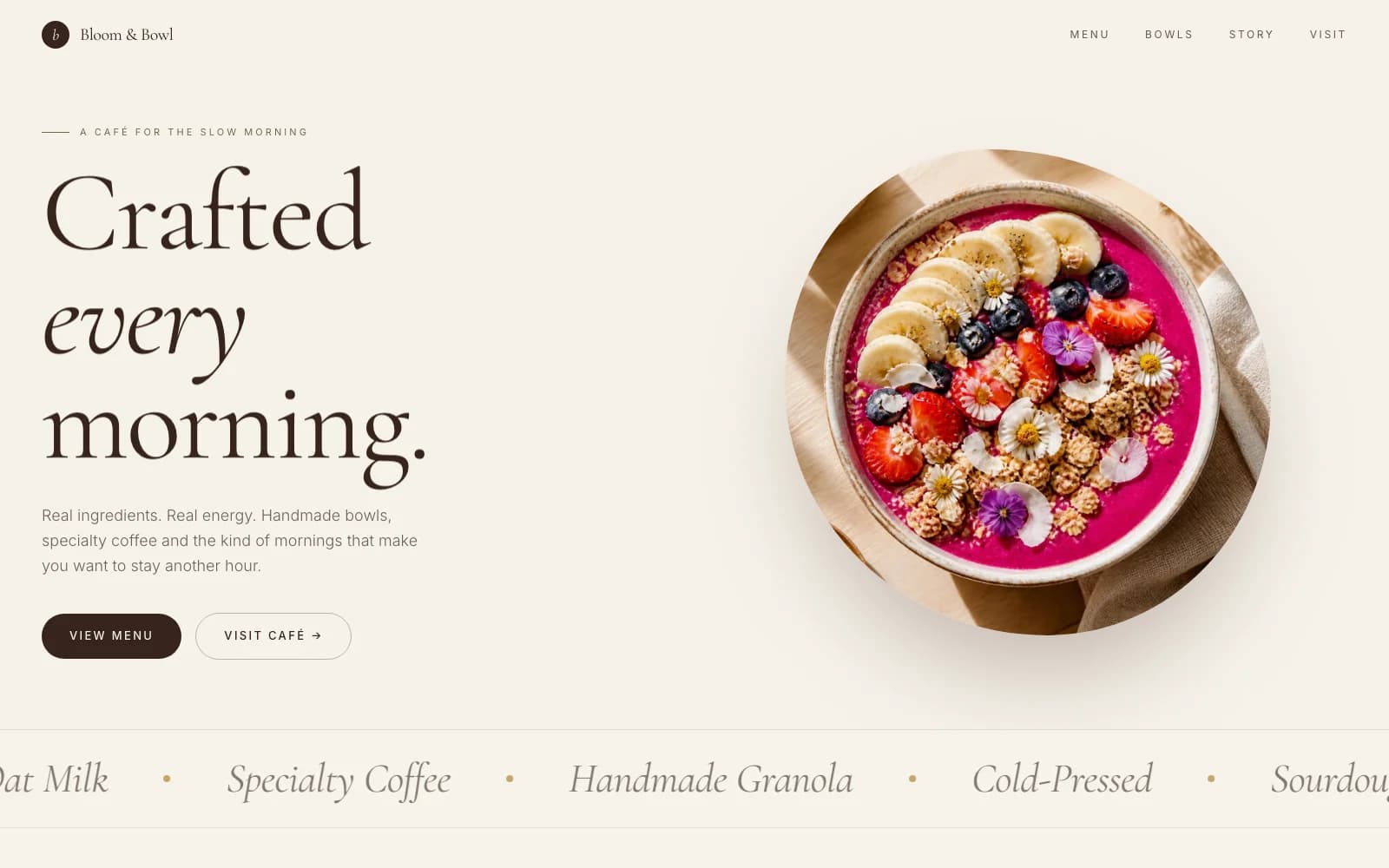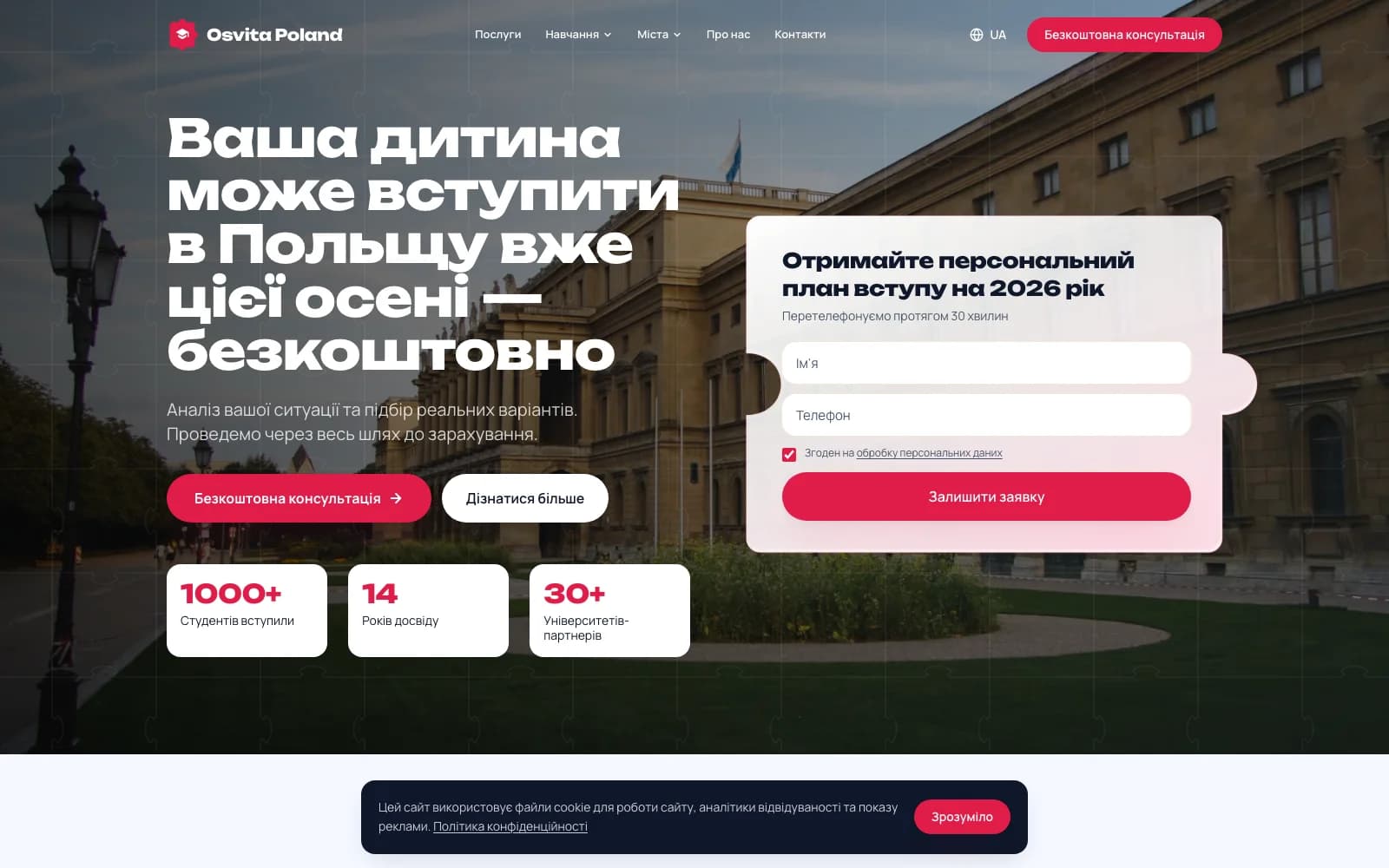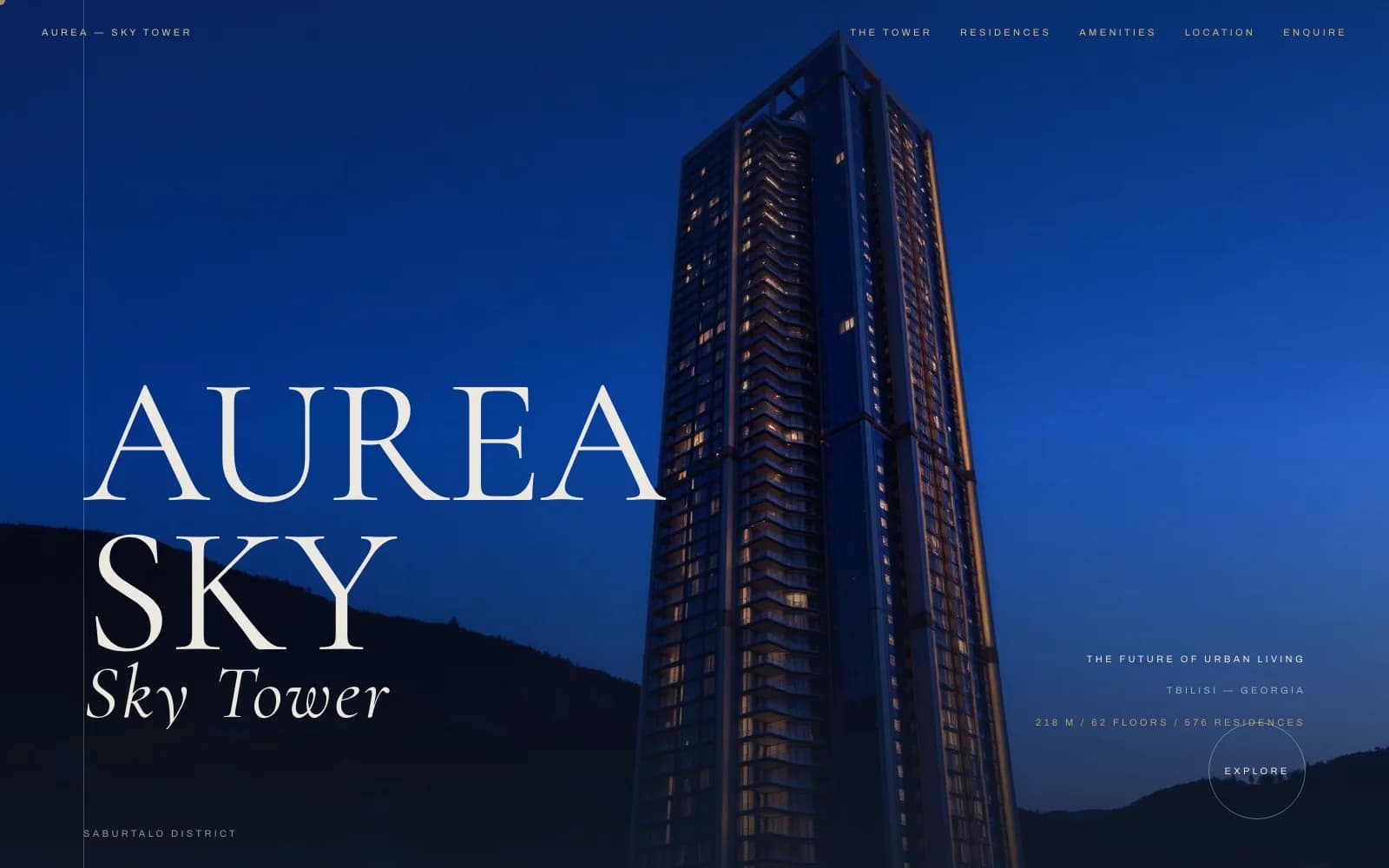
Luxury landing page design works when the page feels premium without making the buyer work harder. The highest-converting pages combine refined visuals with clear positioning, proof, fast performance, and a low-friction next step. For high-ticket brands, luxury is not extra animation or vague copy. It is confidence, specificity, and smooth decision-making that turns qualified attention into inquiries, bookings, or sales.
If you run a premium service, luxury e-commerce, hospitality, travel, wellness, interior design, or real estate brand, this matters anytime a campaign sends traffic to one focused page. A boutique villa agency, for example, can look polished and still lose affluent buyers if the hero video delays the page, the headline says nothing specific, and the inquiry form asks for too much too soon.
This guide explains what luxury landing page design actually is, why it affects conversion, how to structure it, what mistakes to avoid, and how to build one properly. If you already know you need implementation help, the most relevant internal pages are Yarify's website development service, GEO / AI search visibility service, AI automation service, CRM and client portal service, and contact page.
What is luxury landing page design?
Direct answer: Luxury landing page design is the practice of building a focused, premium-feeling page that turns qualified attention into one clear action, such as an inquiry, booking, purchase, or application. It blends brand aesthetics with conversion structure, so the page feels exclusive without becoming vague, slow, or difficult to use.
A luxury landing page is not the same thing as a full website or a generic homepage. It is a single-purpose page designed for one audience, one offer, and one next step.
In practice, that means the page should do five jobs well:
- communicate who the offer is for
- signal quality and trust quickly
- explain what makes the offer different
- remove friction from the next step
- protect the premium feel on mobile as well as desktop
That last point matters more than many brands expect. Google says people-first content should help visitors achieve their goal and leave them feeling they learned enough. On a landing page, that means luxury copy cannot stay abstract. It has to answer real buying questions early.
Why does luxury landing page design matter for conversion?
Direct answer: Luxury landing page design matters because premium buyers judge risk before they judge beauty. If the page feels slow, generic, or hard to trust, the brand feels less expensive no matter how polished it looks. Strong structure, mobile performance, proof, and clarity protect both conversion rate and brand perception.
Luxury buyers are rarely casual buyers. Even when emotion is part of the decision, they still evaluate credibility, fit, and operational maturity before they act.
Two external signals make this especially important:
- Google's mobile-first indexing guidance says Google uses the mobile version of a page for indexing and ranking, so the mobile page cannot be a weakened version of the desktop experience.
- Google's page experience documentation says Core Web Vitals are used by ranking systems and recommends good performance, mobile usability, and avoiding intrusive interstitials.
Speed is not just a technical issue for luxury brands. In web.dev's Milliseconds Make Millions case study, a 0.1 second speed improvement improved progression rates across the funnel, and the luxury segment showed the strongest effect, including a 40.1% increase in movement from product detail to add-to-basket.
Even if your brand sells consultations, showings, treatments, or private experiences instead of physical products, the principle is the same: lag, uncertainty, and weak structure make the experience feel cheaper.
How does a high-converting luxury landing page work?
Direct answer: A high-converting luxury landing page works by answering the buyer's quiet questions in the right order: Is this for me? Is it credible? What exactly do I get? Why should I trust this brand now? What is the safest next step? Design, copy, proof, and CTA sequence all support that decision.
Baymard describes the homepage or landing page as a digital front door and notes that it must help users understand what they landed on, what they can do there, and what to expect, without visual overload. That balance matters even more for luxury brands because premium design often adds more visual pressure, not less.
A strong luxury landing page usually follows this sequence:
- A precise hero that names the offer, audience, and outcome.
- A visual layer that reinforces the promise instead of distracting from it.
- A proof stack with reviews, awards, press, founder credibility, specifications, or client outcomes.
- A clear explanation of the experience, process, or product difference.
- A low-friction CTA that feels appropriate for the buying stage.
Example: a luxury real estate landing page for a new development should not open with only drone footage and a phrase like "timeless living redefined." It should quickly tell the visitor where the property is, who it is built for, what price tier or positioning to expect, why the development is distinct, and how to book a viewing or request the brochure.
If your brand depends on both visibility and lead quality, this is also where content structure and technical SEO start to overlap. Our article on B2B growth challenges explains why weak structure often hurts pipeline quality long before teams notice the design problem.
What is the difference between a luxury brochure page and a luxury landing page that converts?
Direct answer: The difference is not luxury versus conversion. It is atmosphere versus decision support. A brochure-style page mainly signals taste. A high-converting luxury landing page still looks refined, but it also explains the offer, reduces risk, shows proof, and guides the visitor to one confident next action.
| Area | Luxury brochure page | High-converting luxury landing page | Why it matters |
|---|---|---|---|
| Hero message | Uses elegant but generic language | States the offer, audience, and outcome quickly | Premium buyers still need clarity before emotion can work |
| Visuals | Heavy video or decorative imagery | Art-directed imagery that supports the decision | Luxury should reduce doubt, not increase load time |
| Social proof | Buried or absent | Placed near the first commitment point | Trust must appear before the ask |
| CTA | Vague labels like "Discover" | Specific labels like "Book a private consultation" or "Request availability" | Clear CTAs feel safer and more premium |
| Copy | Describes the brand mood | Explains the experience, process, and differentiation | Buyers need specifics, not only adjectives |
| Mobile UX | Desktop idea squeezed onto a phone | Mobile-first layout with preserved content and strong tap targets | Google indexes mobile content first, and users decide there too |
| Form | Long, multi-field, or abrupt | Short, staged, and expectation-setting | Premium leads drop when friction appears too early |
| Performance | Hero media dominates the page | Important content loads early and predictably | Fast pages feel more trustworthy and more expensive |
In other words, luxury is not the opposite of conversion. A better way to think about it is this: luxury design should make conversion feel natural, discreet, and well-managed.
How do you build a luxury landing page that actually converts?
Direct answer: Start with one audience, one offer, and one desired action. Then build the hero, proof stack, CTA flow, mobile layout, and lead capture around that decision. Luxury pages convert best when the brand story, technical performance, and post-click follow-up are designed as one system rather than separate tasks.
Step 1: Define one audience, one offer, and one primary action
Do not try to sell your full business on one page. A luxury landing page works best when the visitor can self-identify immediately.
Define:
- who the page is for
- what specific offer or experience it promotes
- what the visitor should do next
If the page is meant for private consultations, say so. If it is meant to qualify leads for a high-ticket service, say that. If it is for a limited collection or a showroom appointment, structure everything around that one path.
Step 2: Write the hero before you perfect the visuals
Many luxury pages fail because the design direction is finished before the message is clear. Write the first screen first:
- headline
- supporting line
- credibility signal
- primary CTA
Google's helpful content guidance recommends original, useful, complete information that leaves the reader satisfied. On a landing page, that often means replacing vague language like "elevated excellence" with something more concrete, such as "Private interior design for penthouses, boutique hotels, and premium residences in Prague and beyond."
Step 3: Art direct proof, not just aesthetics
Luxury buyers still want evidence. The proof simply needs to look native to the brand.
Useful proof can include:
- founder or creative director credibility
- press mentions
- certifications or design awards
- notable clients or projects
- testimonial excerpts with concrete outcomes
- product or service specifications
- delivery process, availability, or fit criteria
The key is placement. Proof should appear where uncertainty appears, not only on a separate press page.
Step 4: Build a friction-light form or inquiry flow
Luxury buyers do not always want an instant checkout, but they do want a confident next step. That step should feel easy and well-managed.
web.dev's form design basics recommends short, scannable labels, labels above form controls, single-column forms, and tap targets of at least 48px. Those principles are especially useful on premium landing pages because visual refinement often tempts teams to make forms too subtle to use.
A practical pattern:
- keep the first form short
- ask only for information needed to continue the conversation
- set expectations about what happens next
- use a specific CTA label such as "Request a private consultation" instead of "Submit"
If the page drives qualified leads, connect it properly to your CRM and client portal workflow and, when useful, to AI automation for routing, notifications, and follow-up.
Step 5: Design mobile first and protect performance
Google says the mobile version of your content is what gets indexed, and it also expects equivalent content quality across devices. That means your mobile page cannot hide critical copy, trust signals, or metadata.
Technical details matter here:
- web.dev explains that Largest Contentful Paint is about when the main content has likely loaded
- web.dev's responsive image guidance recommends width and height attributes to prevent layout shift
- the same web.dev guidance says not to lazy-load the hero image above the fold
- NNGroup warns that decorative images on mobile slow pages and lengthen the experience without adding value
Luxury pages can absolutely use strong visuals, but every visual has to earn its bandwidth.
Step 6: Measure the page and improve the lead path after launch
A luxury landing page should never be "finished" at publish time. Track:
- CTA clicks
- form-start and form-completion rate
- mobile scroll depth
- page speed and Core Web Vitals
- lead quality by source
- response time after submission
This is where a good build becomes a growth asset instead of a digital brochure. If you are comparing build approaches, our guide to Next.js vs WordPress is a useful companion for the platform decision.
What mistakes make luxury landing pages look expensive but perform badly?
Direct answer: Luxury landing pages usually fail when brands mistake polish for persuasion. Vague adjectives, oversized media, hidden CTAs, overlong forms, intrusive popups, and weak mobile execution make the page feel less premium, not more. High-end buyers still want speed, specificity, and proof before they commit their time or money.
Vague copy that says "premium" without proving it
Words like curated, exceptional, bespoke, or timeless are not useless, but they cannot carry the whole page. If the visitor still cannot tell what is offered, for whom, at what level, or why it is distinct, the copy is not doing its job.
Hero media that delays the page
If the visual layer hides the message or slows the first meaningful paint, the experience stops feeling premium. It starts feeling careless.
Asking for action before building trust
A premium brand can be direct, but it still needs sequence. Asking for a consultation, deposit, or application before the page explains the value is a structural mistake.
Forms that are stylish but frustrating
Low-contrast fields, placeholder-only labels, multi-column layouts, tiny buttons, and surprise validation all reduce completion. A clean form is more luxurious than a clever one.
Intrusive overlays and chat interruptions
Google explicitly warns against intrusive interstitials and dialogs because they frustrate users and can weaken search performance. Beyond ranking, they simply feel cheap when they interrupt a premium buying moment.
When should you use a luxury landing page and when should you not?
Direct answer: Use a luxury landing page when one high-value offer needs one clean decision path, especially for paid campaigns, launches, bookings, or qualified lead generation. Do not use it as a substitute for a full website when visitors need multiple routes, deep content, or broad catalog navigation before they can act.
Use a luxury landing page when:
- you are sending ad traffic to one premium offer
- you need showroom visits, consultations, or private bookings
- you are launching a collection, development, treatment, or experience
- the page needs to qualify leads before a sales conversation
- the brand depends on atmosphere and trust, but the next action is still clear
Do not use it when:
- the visitor needs to compare many products or services first
- the buying path requires broad education before commitment
- the page is trying to replace your entire website
- the offer itself is still too vague to position clearly
Is it worth it for smaller premium brands?
Yes, if each lead or sale has real value. A smaller premium brand does not need enterprise complexity, but it does need focus. If one booking, project, or order is worth enough to justify careful positioning, luxury landing page design can outperform a larger, more generic site.
How much does luxury landing page design usually cost?
Direct answer: Luxury landing page design usually costs more than a template because you are paying for positioning, copy, art direction, performance, and lead flow, not just visuals. The real cost driver is complexity: custom media, motion, integrations, multilingual SEO, and testing push the project far more than color palette or font choice.
The main cost drivers are usually:
- message and offer clarity
- whether copywriting is included
- custom photography, video, or 3D assets
- custom development versus a template adaptation
- form logic, CRM routing, and automation
- multilingual support and search setup
- analytics, A/B testing, and post-launch iteration
The wrong comparison is "luxury page versus normal page." The better comparison is "high-performing premium page versus expensive traffic sent to an underperforming page." If you want help scoping the right level of work, start with Yarify's website development service or contact page.
FAQ
What makes a landing page feel luxury without hurting conversion?
A landing page feels luxury when the design is restrained, the visuals are art-directed, the copy is specific, and the next step feels easy. Premium does not mean vague. It means the brand looks considered while the structure still helps the visitor decide quickly and confidently.
Should a luxury landing page show pricing?
Sometimes yes, sometimes no. If pricing helps qualify the right buyers, showing a from-price, range, or investment minimum can improve lead quality. If the offer is highly bespoke, the page should still set expectations about positioning, scope, or fit so visitors are not left guessing.
Are templates good enough for luxury brands?
Templates can be acceptable for early validation, but they rarely create a convincing luxury experience on their own. Premium brands usually need sharper typography choices, better spacing, stronger art direction, cleaner motion, and clearer trust architecture than most templates provide out of the box.
How long should a luxury landing page be?
It should be as short as possible and as long as necessary. High-ticket pages usually need more proof, context, and objection handling than low-ticket pages, so a longer page can convert better. The real rule is not length. It is whether every section helps the visitor move forward.
Do luxury landing pages need separate mobile design and speed work?
Yes. Mobile is not a secondary view anymore. Google indexes the mobile version of your content, and many premium buyers first encounter the brand there. A luxury page that hides content on mobile, loads slowly, or uses awkward forms weakens both conversion and perceived brand quality.
Conclusion
Luxury landing page design is not about making a page look expensive. It is about making the entire decision feel well-managed, low-friction, and worth trusting. The brands that convert best are usually the ones that combine premium art direction with specific messaging, visible proof, fast performance, and a next step that feels natural.
If you want to turn this idea into a real website, automation, CRM, or SEO/GEO system, Yarify can help you design, build, and launch it properly. The best next step is a focused conversation through our contact page.