One app. Both stores.
iOS and Android from one codebase. Built by seniors, shipped to both stores.
-
Senior engineers
No juniors. No middlemen.
-
Fixed price
Overruns are on us.
-
Live in weeks
Weekly demos on staging.
-
You own the code
100% of the IP, day one.
Yarify builds mobile apps for iOS and Android with React Native or Flutter, so one senior team ships one codebase to both stores. A new app starts with a free scoping call, a written scope and one fixed quote; if our estimate on that fixed scope is wrong, the extra hours are ours. Existing apps get a monthly team with 2 weeks' notice. You own the code, the developer accounts and the IP.
Idea to App Store, in five pictures
-
Written scope
Screens, roles, integrations
-
One codebase
iOS and Android together
-
Weekly builds
On your phone via TestFlight
-
Store launch
Review handled by us
-
You own it
Repo, accounts and IP
What we build for phones
-
New product apps
An MVP in both stores, scoped to what teaches you something from real users.
-
Companion apps
A mobile front for the web platform you already run, on the same API and accounts.
-
Field and internal apps
Offline-first forms, scanning, photos and sync for teams that work away from a desk.
-
Apps that stalled
Crashing builds, rejected releases, an abandoned codebase. We audit it and get it shipping again.

Two native apps vs one cross-platform app
For most products, one shared codebase is the better trade. We say so on the call when it isn't.
Separate Swift and Kotlin apps
- Two teams, two codebases
- Every feature built twice
- Releases drift apart
- Right for heavy 3D, AR or deep OS work
React Native or Flutter
- One senior team
- Most code shared across iOS and Android
- Both stores on the same release
- Native modules where a feature needs them
How a new app gets built
-
Free scoping call · Before kickoff
30 minutes with the engineer who would build it.
-
Scope and fixed quote · Week 1
Screens, user roles, backend, store requirements and what is out.
-
First build on your phone · Weeks 1–3
Navigation, auth and a TestFlight or internal-testing build.
-
Weekly builds · Weekly
Every week a new build you can tap through, not a status report.
-
Hardening and store review · Before launch
Crash reporting, analytics, privacy labels and both store submissions.
-
Handover or keep going · After launch
Documented handover, or a monthly team with 2 weeks' notice.
Our default mobile stack
| Layer | Default choice |
|---|---|
| App | React Native with Expo, or Flutter. See React Native vs Flutter |
| Language | TypeScript or Dart |
| Backend | Node.js / TypeScript, Java Spring Boot or Python, with PostgreSQL or MongoDB |
| Payments | App Store and Google Play billing, or Stripe where store rules allow |
| Releases | CI builds, TestFlight and Play internal testing, over-the-air updates where allowed |
| Monitoring | Crash reporting and product analytics from the first build |
Fixed price on a fixed scope.
A new app gets one written scope and one fixed quote. If our estimate on that scope is wrong, the extra hours are our cost. Changes you request are quoted separately first. Ongoing work runs on a monthly team with 2 weeks' notice.
- The developer accounts are registered in your company's name
- You own 100% of the code and IP from the first commit
Mobile-first products we shipped
Web products designed for the phone first, on the same TypeScript stack our apps use.
-
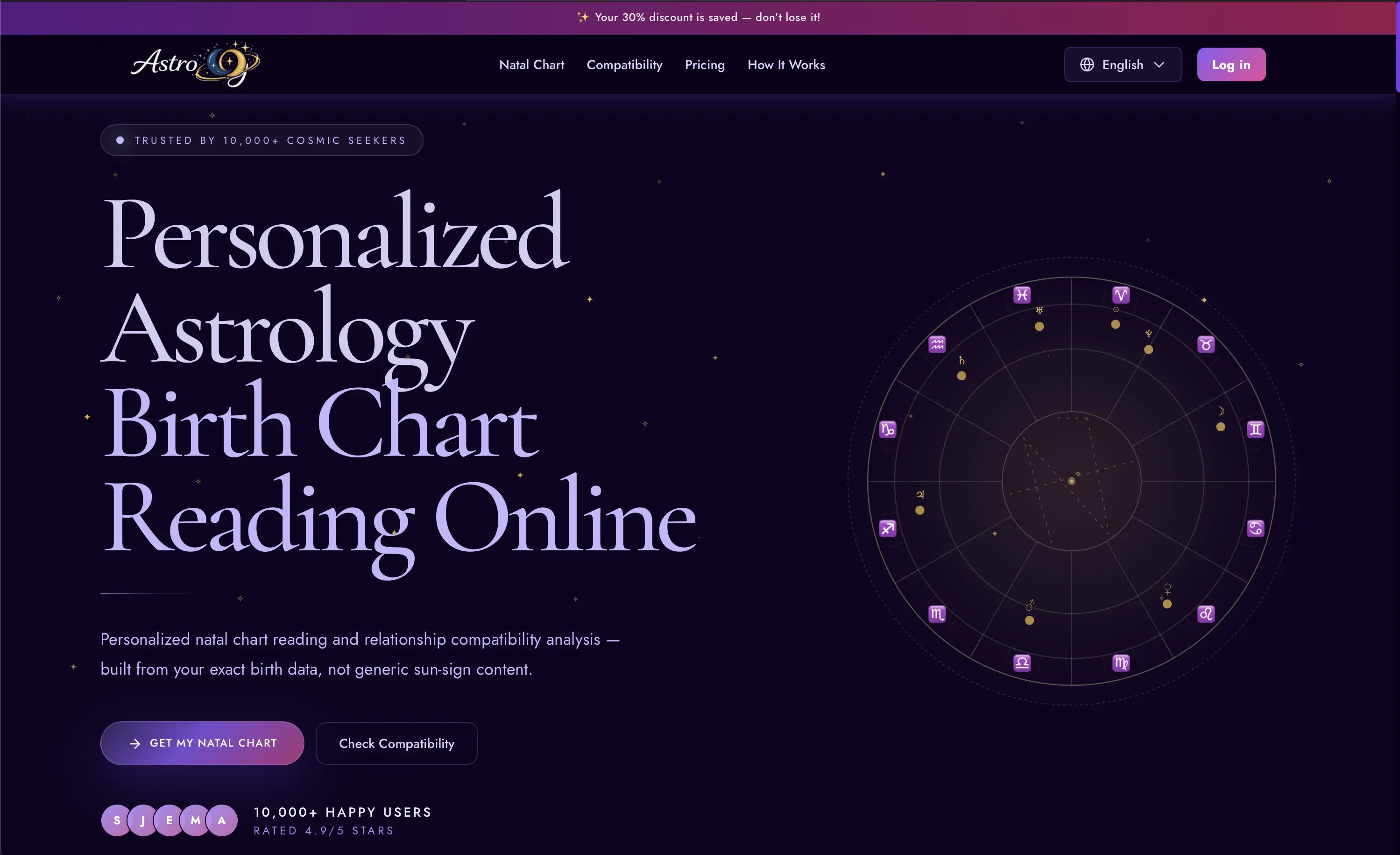
Astrooly: Paid SaaS in Three Languages
Multilingual astrology SaaS: natal chart engine, AI-assisted readings, Stripe checkout in 3 languages with country pricing, server-side referral attribution, admin dashboard, GTM analytics.
-

Osvita Poland: Admissions Made Clear
Ukrainian-first, mobile-first admissions site for a study-abroad consultancy. Five-step process, consultation form above the fold, Next.js and TypeScript, live in four weeks.
-

Selling 576 Homes Before the Tower Exists
Off-plan sales platform for a 62-floor, 576-residence tower. Next.js and GSAP, five-step buyer journey, mobile-first, live in six weeks.


Questions buyers ask us
How much does it cost to build a mobile app?
Market surveys put a simple app at roughly $25k–$60k, a typical product app at $60k–$150k and complex apps above that. A cross-platform build usually costs less than two native apps. We quote one fixed price after a free call. See the mobile app development cost guide.
React Native or Flutter: which do you recommend?
Both are production-ready. React Native fits teams already on React and TypeScript and shares code with a web app. Flutter gives pixel-identical UI and strong performance for custom interfaces. We recommend one on the call based on your team and product. See React Native vs Flutter.
How long does mobile app development take?
A focused first version typically takes 10–16 weeks from signed scope, plus store review. You get a build on your phone within the first few weeks and a new one every week. Heavy integrations, offline sync or regulated data add time, and the quote says so upfront.
Do you handle App Store and Google Play submission?
Yes. We prepare store listings, privacy labels, review notes and test accounts, and submit both apps. The developer accounts are registered in your company's name, so the apps and their reviews belong to you.
Can you take over an existing mobile app?
Yes. We start with a code audit: build from a clean machine, dependency and SDK versions, crash data and store status. Then you get a fixed quote for the fixes, or a monthly team if the work is open-ended.
Do you build the backend too?
Yes. Most apps need an API, authentication, a database, push notifications and an admin panel. We build them in the same project, deployed to your own cloud account, so one team owns the whole product.
Keep reading
-
Mobile app development cost
What a mobile app costs in 2026: ranges by complexity, cross-platform vs native, regional rates, store fees, yearly maintenance and an illustrative worked example.
-
React Native vs Flutter
React Native or Flutter for your app? Language, rendering, performance, web reuse, hiring pool and maintenance compared, with plain rules for when each one wins.
-
React Native developers
Senior React Native engineers for iOS and Android from one codebase. Expo, the New Architecture, offline data and store releases. Join your team monthly or take a fixed-price app build.
-
Flutter developers
Senior Flutter engineers for custom-designed iOS and Android apps from one Dart codebase. Clear state management, smooth animations and store releases. Monthly or fixed-price.
-
MVP development
Fixed-price MVP development. A senior team scopes it in writing, ships a deployed build early, demos weekly and launches a focused MVP in typically 8–12 weeks.
-
SaaS development
SaaS products built on solid foundations: multi-tenancy, Stripe subscriptions, auth and roles, admin dashboards and product analytics. Fixed quote for the first version.
Tell us the app. Get a price that will not move.
A free 30-minute call with the engineer who would build it, then a written scope and one fixed quote.